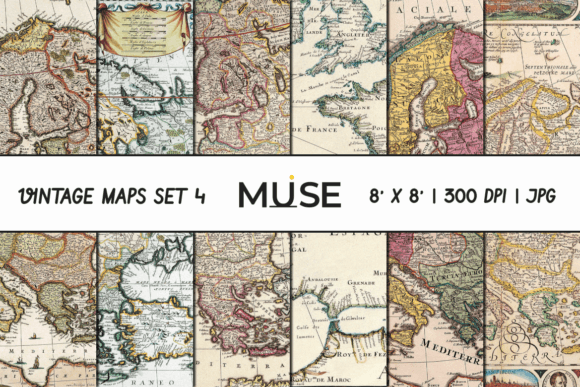
Vintage Maps Patterns Pack 4: Strategic Design Resources for Creative Professionals
For creative professionals seeking to infuse their digital projects with a sense of history, depth, and character, the Vintage Maps Patterns Pack 4 offers a compelling solution. This curated collection includes six high-quality digital papers, each capturing the intricate details and nostalgic charm of vintage cartography. Designed at 300 dpi resolution (2400 × 2400 px) and provided in JPG format without watermarks, these non-seamless patterns are ideal for use in websites, business cards, invitations, scrapbooking, and more—offering both flexibility and visual appeal.
Elevating Brand Identity with Historical Aesthetics
In today’s fast-paced digital landscape, standing out often requires a unique visual identity. The Vintage Maps Patterns Pack 4 provides an opportunity to do just that by incorporating historical elements into modern design work. Whether you're branding a travel blog, launching a heritage-themed product line, or designing packaging for artisanal goods, the inclusion of vintage map textures can evoke a sense of authenticity and craftsmanship.
Consider how a boutique coffee shop might use one of these maps as a background for its website or menu designs. The aged look could subtly suggest a journey through time, connecting the consumer to the story behind the beans. Similarly, educators creating materials about geography, history, or cultural studies can enhance engagement by using these patterns to create visually rich presentations or handouts.
Aligning Visuals with Narrative
The key to strategic use lies in aligning the aesthetic with the message. Vintage maps aren’t just decorative—they can communicate themes like exploration, tradition, and legacy. When used thoughtfully, they support the narrative of your brand or content. For example, a marketing agency promoting a new tourism campaign could layer one of these patterns beneath call-to-action buttons or hero images to reinforce the idea of adventure and discovery.
However, it's important to consider the context. If your brand is all about minimalism and futuristic tech, these patterns may not be the best fit. They thrive when used in environments where storytelling and nostalgia play a role in customer experience.
Operational Efficiency Through Pre-Designed Assets
One of the most practical benefits of using the Vintage Maps Patterns Pack 4 is the time saved in sourcing and customizing assets. High-resolution files eliminate the need for resizing or compromising quality during production. This is especially valuable for freelancers, small business owners, and marketers who must balance creativity with tight deadlines.
Imagine a scenario where a blogger needs to redesign her newsletter template quickly to coincide with a seasonal launch. Instead of commissioning custom illustrations or searching for royalty-free images, she can pull from this pack, apply subtle overlays or color tints, and maintain a consistent theme across all communications. The result is a professional, on-brand asset created efficiently and affordably.
Planning Ahead: Use Cases and Application Strategies
- Websites: Use these patterns as background textures for landing pages or sections dedicated to history, travel, or storytelling. Pair them with contrasting text and subtle transparency to ensure readability.
- Business Cards: Add a touch of sophistication by using a vintage map as a border element or watermark. It works particularly well for consultants, real estate agents, or any service tied to location or heritage.
- Invitations and Event Materials: Whether for a themed wedding or a historical society gala, these patterns can provide a classic yet elegant backdrop that enhances the event’s ambiance and message.
- Scrapbooking and Print Projects: Ideal for personal or commercial photo albums, posters, or educational materials. Their texture adds depth to printed matter, making static photos feel dynamic and immersive.
To maximize impact, start by identifying the core message of your project. Ask yourself: What does the pattern represent? How will it guide the viewer’s attention? Will it complement or clash with other design elements? These questions help ensure the vintage map doesn't become a distraction but rather a purposeful addition.
Design Decisions That Deliver Results
Intentional design decisions lead to better user engagement and stronger brand recall. When integrating the Vintage Maps Patterns Pack 4, think about contrast, hierarchy, and accessibility. Since the patterns are not seamless, careful placement is essential to avoid visible seams that might break the visual flow.
A common mistake is overloading a design with too many textures. To avoid this, limit the use of these maps to one or two focal points per page. For instance, applying the pattern to a header image or sidebar can create visual interest without overwhelming the layout. Also, remember to adjust the opacity so that the underlying content remains legible and the pattern serves as a subtle enhancement rather than a dominant feature.
Strategic Tips for Effective Integration
- Test Different Layouts: Experiment with how the pattern interacts with your chosen fonts, colors, and imagery. Some combinations will naturally harmonize, while others may require additional tweaks.
- Use Layers Wisely: In design software like Adobe Photoshop or Illustrator, place the pattern on a separate layer so you can easily adjust blending modes or masking effects later.
- Consider Audience Perception: Vintage aesthetics can resonate differently with various demographics. While some may associate them with nostalgia, others might interpret them as outdated. Align the choice with your target audience's values and expectations.
Long-Term Value and Reusability
Investing in a resource like the Vintage Maps Patterns Pack 4 isn’t just about immediate results—it’s also about long-term value. With commercial use rights included, these patterns can be reused across multiple campaigns or repurposed for different formats without needing to purchase additional licenses. This makes them a cost-effective tool for ongoing branding efforts.
For entrepreneurs building a portfolio site or designers working with clients on rebranding, having a reliable set of textures ready to deploy can streamline the creative process. You’re not just saving time; you're maintaining consistency in your visual language, which strengthens brand recognition over time.
Repurposing for Multiple Projects
Think beyond the initial application. These patterns can serve as:
- Banners for email newsletters
- Headers for social media posts
- Backgrounds for PDF brochures or reports
- Textures in video editing or slide decks
Risks of Random Use and Mitigation Strategies
While the Vintage Maps Patterns Pack 4 offers significant potential, using it randomly without a clear objective can dilute your message. A poorly integrated pattern may confuse users, reduce readability, or fail to contribute meaningfully to the design’s purpose.
For example, placing a full-page vintage map as a background for a technical blog post might make the content harder to digest. Or using it on a mobile-first website without considering scaling could lead to usability issues. Always test the pattern in context before finalizing a design.
How to Avoid Common Pitfalls
To mitigate these risks:
- Define the Goal First: Are you aiming to build trust, inspire curiosity, or simply add visual flair? Let the goal dictate how—and whether—you use the pattern.
- Balance Texture with Simplicity: Don’t let the pattern overshadow clean typography or important information. Use it to frame, not to fill.
- Stay Platform-Aware: Ensure the pattern looks good on both desktop and mobile devices. Adjust sizing and positioning accordingly.
Practical Examples of Impactful Use
Let’s explore a few real-world scenarios where these vintage map patterns can deliver measurable impact: Scenario 1: Real Estate Marketing Scenario 2: Educational Publishing Scenario 3: Digital Product Packaging A subscription box company curating vintage items for collectors uses the patterns on its product unboxing experience. The added detail elevates the perceived value of the box and aligns with the brand’s theme of rediscovering the past.
Adapting for Different Niches
Each pattern in the Vintage Maps Patterns Pack 4 has distinct characteristics. Some may lean toward European-style topography, while others reflect American frontier maps. Understanding these nuances allows you to tailor the pattern to your niche. A travel influencer might prefer a map with coastal lines to emphasize journeys, whereas a craft store owner might choose a more rugged terrain for a handmade aesthetic.
Creating Thoughtful Content with Purpose
Content creators know that visuals are a powerful component of storytelling. The Vintage Maps Patterns Pack 4 supports this by offering tools that help you craft backgrounds that speak volumes. When paired with concise copy and intentional design choices, these patterns can turn ordinary layouts into memorable experiences.
Consider how a travel vlog might open with a title card using one of these maps as a base. The texture adds warmth and a sense of journey, immediately setting the tone for the content. Or a podcast cover art featuring a vintage map could symbolize the show’s focus on uncovering untold stories.
Guidelines for Intentional Use
To use these resources intentionally:
- Map Your Message: Just as the patterns depict physical locations, they should also align with your brand’s mission and message.
- Limit Scope: Apply the pattern only where it adds strategic value. Overuse can lead to visual clutter and reduce effectiveness.
- Enhance, Not Obscure: Ensure that the pattern complements the primary content. It should enhance the experience, not obscure it.
Conclusion: Making Informed Choices for Better Outcomes
The Vintage Maps Patterns Pack 4 is more than just a collection of beautiful textures—it’s a versatile toolkit for creative professionals who understand the power of visual storytelling. By choosing to integrate these patterns with a clear strategy in mind, you can elevate your digital projects, strengthen brand identity, and engage audiences more effectively.
Whether you're an entrepreneur refining your pitch deck, a designer crafting a client’s website, or a hobbyist experimenting with printables, these resources offer a foundation for thoughtful, impactful design. Remember, the best outcomes come not from random decoration, but from deliberate choices made with purpose and insight.